Something's shifting on warehouse floors across the country. Businesses that have run LPG counterbalance forklifts for years, doing the daily grind of loading docks and racking aisles, are quietly swapping them out for electric. Not because of a mandate. Not because someone told them to. Because the numbers and the runtime are stacking up.
A few years ago, going electric meant accepting trade-offs: shorter runtime, slow overnight charging, a machine that couldn't quite keep pace with a busy multi-shift operation. That's changed. And the businesses making the switch now aren't looking back.
Why Gas Forklifts Are Getting More Expensive to Run
LPG hasn't got any cheaper, and neither has the upkeep that comes with running an internal combustion forklift. Every LPG or diesel unit needs regular engine servicing: oil, filters, spark plugs, exhaust checks. That's parts, labour, and downtime on top of the fuel bill.
Then there's air quality. Running a gas forklift indoors means exhaust fumes in the building. Businesses are under more pressure to keep indoor air clean, and an engine forklift working an eight-hour shift doesn't help the case.
Battery Tech Has Solved Electric's Biggest Limitation
The old objection to electric forklifts was straightforward: they'd run flat mid-shift, then sit for hours on a charger before they could go again. Fair complaint, when lead-acid was the only option.
Lithium-ion has changed that. A lithium-ion forklift battery can be topped up in short bursts, during a break, a shift changeover, whenever the truck's parked for ten or fifteen minutes, rather than needing a dedicated overnight charge. That's opportunity charging, and it means a lithium-powered forklift can run across multiple shifts without the floor missing a beat.
Lithium batteries are also maintenance-free. No watering, no equalising charges, no separate battery room, just plug it in and get on with the day. And because there's no acid to top up or cells to check, there's less to go wrong and less for a maintenance team to keep on top of.
The Real Cost Comparison: Electric vs LPG
If you run the numbers on electric forklift vs gas forklift costs, the gap is hard to ignore. Take away the fuel bill and the servicing schedule, and an electric forklift costs noticeably less to run over its working life than a comparable gas machine. No LPG to buy. Fewer moving parts to wear out. Lower servicing costs. With opportunity charging, a lithium-ion truck can keep working across multi-shift operations, not just a single shift with an overnight charge.
Electric also suits indoor work better: warehouses, cold storage, food-grade sites, anywhere noise or air quality matters. It’s also worth being upfront about where it doesn't suit as well: rough, uneven, or muddy outdoor terrain still favours a diesel or LPG counterbalance forklift. Electric is better suited for sealed surfaces, loading docks, yards, and warehouse floors.
For most Australian businesses running standard pallet handling on sealed ground, the switch stacks up. And you don't have to take our word for it.
Try the KBE25 Free for 7 Days
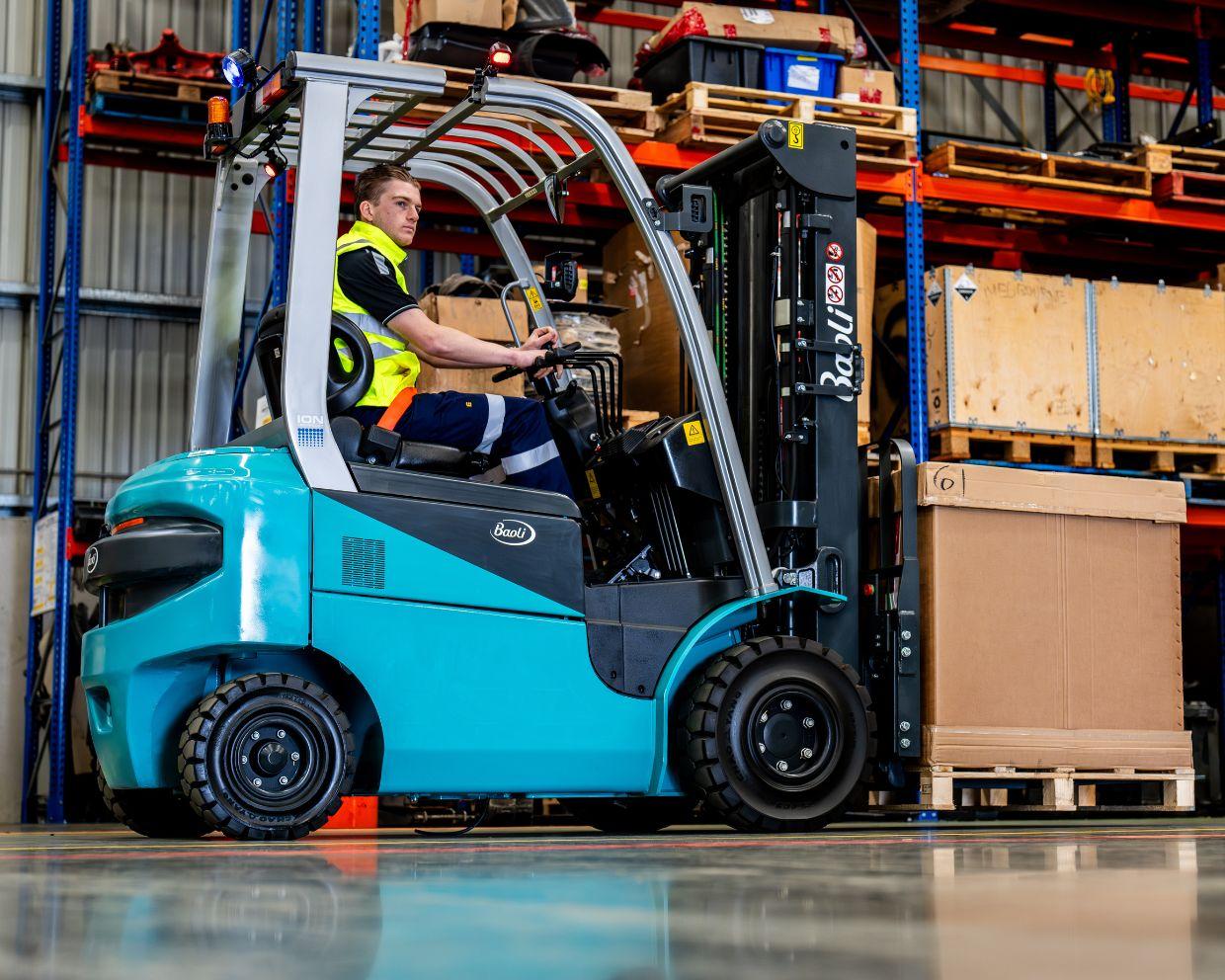
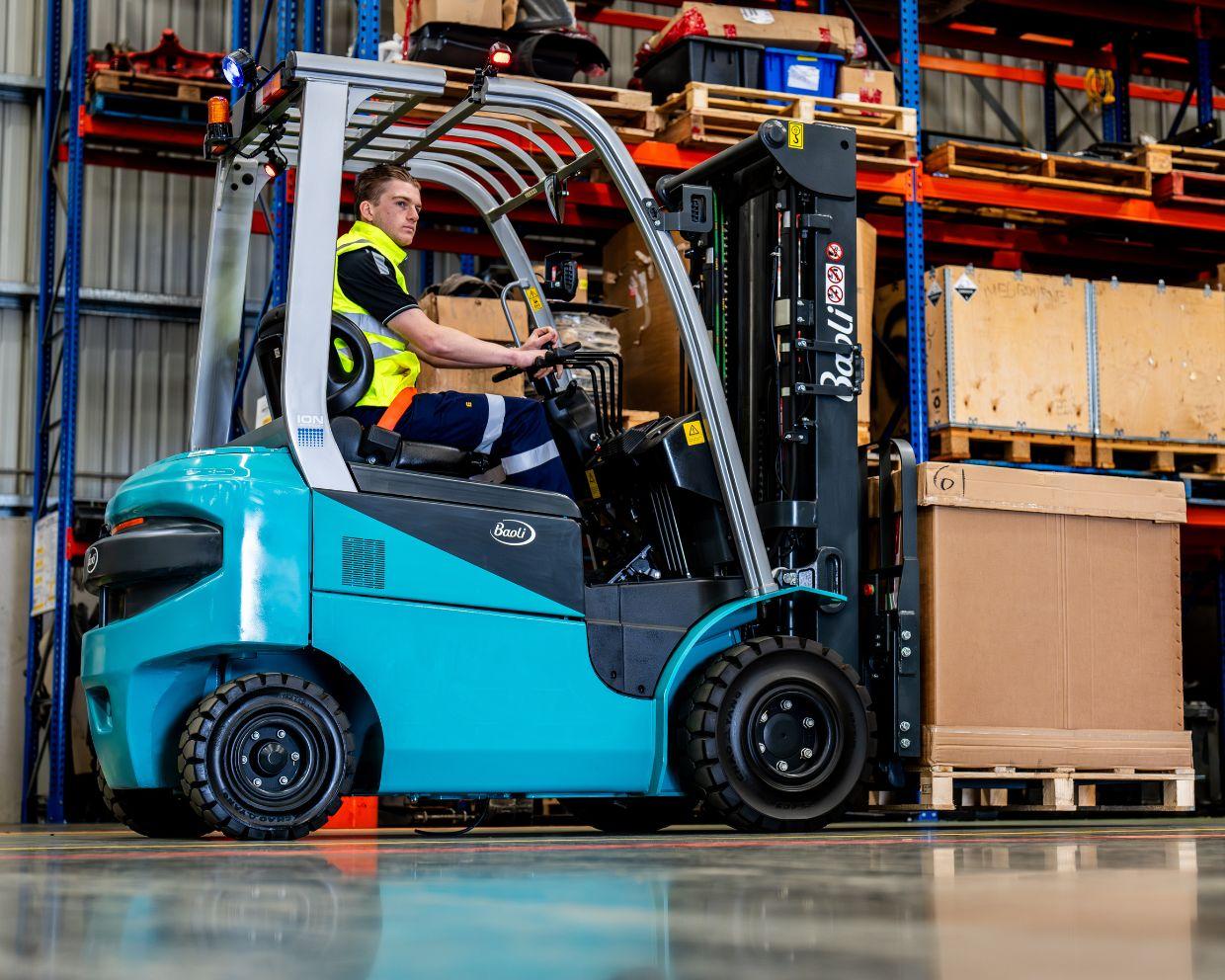
Baoli is currently offering a free 7-day onsite trial of the KBE25, our 2.5 tonne forklift built on lithium-ion battery technology, with free delivery included to certain metro areas*. Run it in your own operation and see the difference for yourself. Trading in a gas counterbalance forklift while you're at it? You'll also get a minimum $2,000 forklift trade-in!
No pressure, no obligation, just a chance to put it to work on your floor for a week. Book your free KBE25 trial and see why so many Aussie businesses aren't looking back.
*For full terms & conditions, click the button above.